

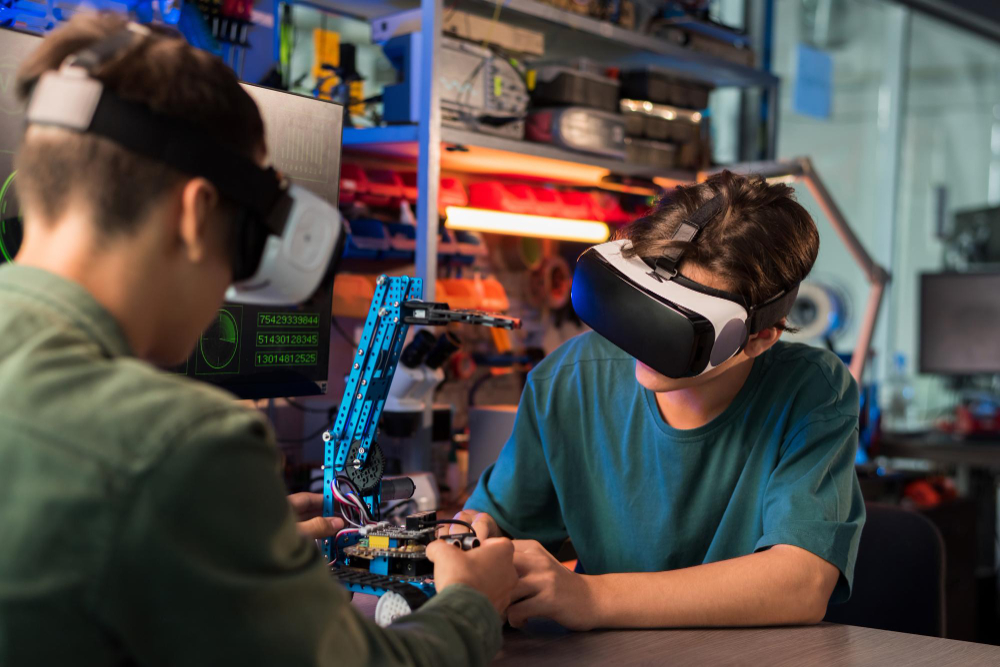
Game worlds once looked flat and slow. But new graphics cards changed that. These chips, called GPUs, made games look sharp and fast. At the same time, robots also began to use more visual tools. Both fields found a match in the same type of hardware.
What a GPU Really Does
A GPU does one simple thing. It handles many small tasks at the same time. It works like a team of helpers who each take one job. A CPU works with one or two jobs at once. A GPU can handle thousands. This makes a huge difference for tasks that need speed and detail.
Why Games Need GPUs
Games need fast images. They need color, motion, and light to show at once. Every frame is a puzzle of shapes. A GPU fits the shapes together many times per second. Without this power, games would stutter and break.
Why Robots Need GPUs Too
Robots use cameras and sensors to “see” the world. The data comes fast. A robot must act in real time. It must know where to move, what to avoid, and how to respond. This takes a lot of compute power. A GPU helps by breaking down the vision task into tiny parts.
The Shared Skill: Parallel Work
Game images are built in layers. Robot vision is also built in layers. Both need parallel steps that run side by side. This is the main reason both industries share GPU tech. One chip can handle many small tasks at once. This is perfect for both work and play.
How AI Boosts This Connection
AI now plays a big role in games and robots. Games use AI to make scenes smart. Robots use AI to learn and act. Modern AI uses deep learning. Deep learning needs a GPU. It runs best with many tiny steps at once. This shared need brings both fields even closer.
The Link to Real-Time Choice
Speed matters. A delay in a game is annoying. A delay in a robot can be unsafe. Both need real-time work. A GPU lets both systems respond at once. This is why so many tools in both fields now ship with built-in GPU support.
GPUs Make Worlds and Maps
Games build 3D worlds. Robots build 3D maps. These maps help robots move through homes, streets, and even farms. The steps are alike. Both need depth, shape, color, and fast math. The math is heavy, but a GPU can lift it with ease. Some people even compare game tech to tools used in online fun, like how players explore digital scenes on bestaustraliancasinosites real money online pokies, but in robotics, the same GPU ideas help machines “see” the real world in a simple and safe way.
How Tools Blend Across Fields
Many tools from game studios now show up in robotics labs. Game engines like Unity and Unreal make rich 3D scenes. These engines can also train robots. A robot can “practice” in a fake world before it tries the real one. This helps reduce risk. It also cuts cost.
Why GPU Tech Saves Time
A GPU makes hard work simple. It cuts long tasks into short steps. When you split a task into tiny parts, the process becomes fast. This helps game makers. It also helps robot engineers. Both can test ideas faster. A fast cycle leads to strong designs.
Shared Hardware, Shared Growth
Since both fields use the same chips, the market grows. More GPUs push prices down. More developers share tools. A fix made for a game can help a robot. A trick found in robotics can help a game. Growth in one space supports growth in the other.
A Future Shaped by GPU Tech
We are now entering a world where games feel real. Robots also act smarter than ever. Both trends come from GPU advances. Each new GPU can handle more tasks. Each upgrade gives more detail, more depth, and more speed. The same hardware now drives play, work, and learning.
Why This Matters for Everyone
We live in a world full of screens and smart tools. Kids play in 3D game worlds. Warehouse robots carry boxes. Cars drive with vision systems. Drones scan fields. All of this uses the same basic tech. GPUs help make life smoother. They help tasks run without delay.
A Clear Path Forward
As the need for speed grows, the use of shared GPU tech will grow too. We will see more links between game teams and robot teams. We will see more AI that learns from both worlds. This shared path brings new ideas and faster progress.
Final Thoughts
Game development and robotics seem like very different fields. One is for fun. The other builds tools that help with work and safety. Yet both rely on vision, speed, and real-time choice. Both need a way to handle many tiny jobs at once. The GPU is the perfect match.
This is why the same chip powers both. It turns pixels into worlds. It turns images into action. And as both fields rise, the GPU will stay at the center, shaping our games, our machines, and our future.